
An active day changes how dirty or oily hair gets. It does not invent a separate medical routine. Two American Academy of Dermatology pages, both read on 15 October 2026, split the advice by who it is for. One page is general hair-care tips and says it was last updated on 12 August 2024. The other is written for children ages 8 to 12 and says it was last updated on 14 November 2023. This note is general consumer information. It does not diagnose a scalp condition and it does not prescribe a treatment.
If you are choosing a bottle you can actually press after a run, the packaging note is about the container, not the hair.
Adults: dirt and oil, then where the product goes
The adult tips page tells you to learn your hair type first: curly, straight, coarse, fine, or another type, and to pick products that say they are made for that type. It mentions number-and-letter systems that run from fine, straight hair to thick, tightly coiled hair. It does not print a chart of those codes.
Wash frequency on that page follows how often the hair gets dirty or oily. If you have straight hair and an oily scalp, you may want to shampoo every day. If your hair is dry, textured, curly or thick, shampoo when needed, at least once every 2 to 3 weeks as needed. Sweat is one way hair gets dirty. The page itself uses dirt and oil as the test, not the name of a sport.
Put shampoo on the scalp rather than down the whole length, so you wash away built-up product, dead skin and excess oil without drying the lengths as much. Use conditioner after washing. Fine or straight hair gets conditioner on the ends. Dry or curly hair gets conditioner on the entire length.
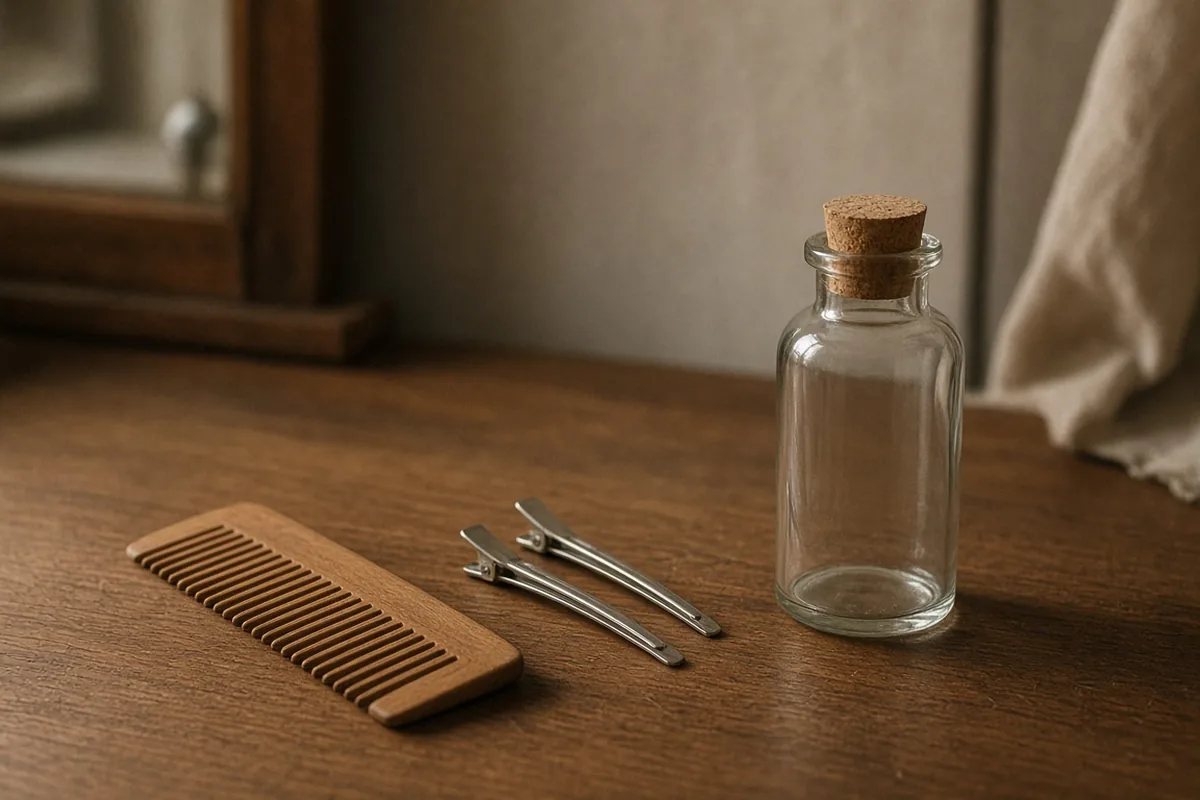
Wet hair is easy to damage. Use a wide-tooth comb instead of a brush. Thick, curly hair is easiest to comb in the shower before you rinse the conditioner. Straight hair can dry a little first. Start at the ends and move upward. Wrap the hair in a towel or a T-shirt to take up water. Rubbing it dry can damage it.
Heat is the last item on that page. Limit blow drying and flat or curling irons. Use a low or medium setting and a product meant to protect hair from the heat. The page says excessive heat can cause damage no matter the hair type.
Children ages 8 to 12: activity is one of three traits
The second page is not an adult chart. It says parents often ask how often a child between 8 and 12 needs to shampoo, and it tells you to consider hair type, age and activity level.
On its chart, shampoo every other day or daily lines up with age 12 or the start of puberty, with oily straight hair, and with being active: playing outdoors, playing sports, or swimming. The exception on that line is dry and curly hair. Ages 8 to 11 are listed at 1 or 2 shampoos a week, again with an exception for dry and curly hair. Dry and curly hair, including braids or weaves, is listed at every 7 to 10 days. After heavy sweating or swimming, that same line says to rinse and condition the hair.
The page then says you may add one shampoo a week if the hair or scalp looks oily, and remove one a week if the hair is dull and shedding or feels dry. Weather can change the count. Those adjustments are written for the child the page is about.
Do not paste the 8-to-12 chart onto an adult head. The adult page already has its own rule: straight hair with an oily scalp may be shampooed daily, and dry, textured, curly or thick hair is washed when needed, at least once every 2 to 3 weeks. Use the page that matches the person.
The beauty and hair section will stay on this kind of consumer page. It will not turn a wash interval into a diagnosis.