An underarm gusset provides room to lift the arms. To determine the ideal gusset height, you may have to do tests and mock-ups to find the desired mobility. For a stage costume underarm gusset and breathable lining project, work through movement, lining and shield attachment in that order. Use this guide alongside our style section.
Draft the stage costume underarm gusset
Janome’s stage-movement tutorial is intermediate, and you should have basic experience setting a sleeve. Use its set-in-sleeve approach for the drafting sequence below. Sew the sleeve side seam, then measure between the notches along the curve. Keep that underarm measurement on your pattern worksheet. For height, use the tutorial’s stretch categories as the starting point:
| Fabric category | Janome gusset-height guidance |
|---|---|
| Zero stretch | For zero stretch, the tutorial suggests a gusset 3+ inches tall. |
| Average stretch | For average stretch, the tutorial suggests 2-3 inches as a starting range. |
| Stretch fabrics | For stretch fabrics, the tutorial suggests under 2 inches. |
Shape the pattern
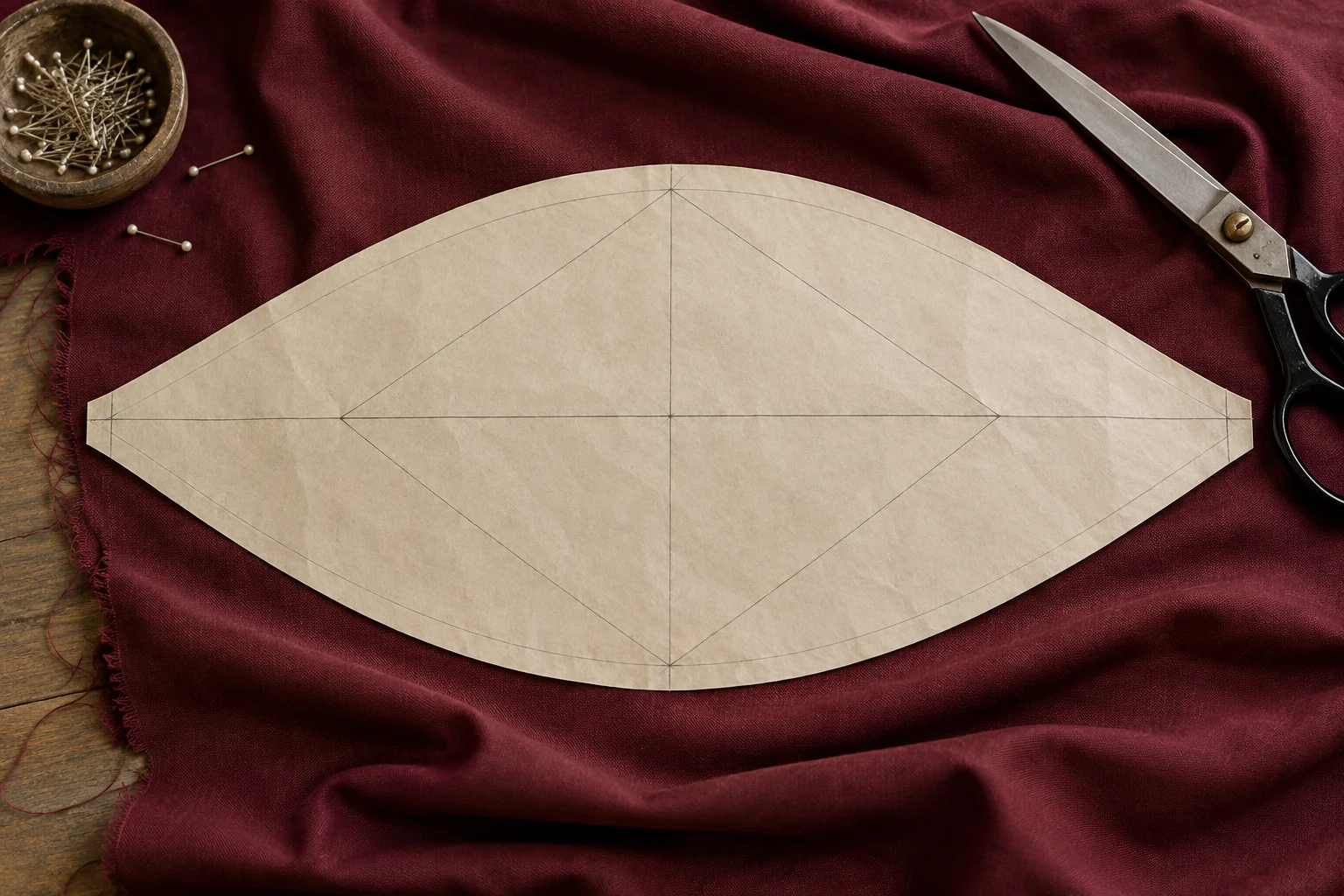
- Draw the desired gusset height perpendicular to the centre of the underarm measurement.
- Connect the points to form a diamond.
- Draw a gentle curve around the diamond to create a football shape.
- Add the desired seam allowance to the gusset pattern.
Cut, align and check the corners
Align gusset height with the direction of greatest stretch, usually the bias. Mark the seam allowance on both gusset points. Align the marked gusset points with the sleeve notches. Stop stitching at the marked gusset point. Align bodice notches with sleeve notches. Check gusset corners for raw edges, wrinkles and holes; redo the attachment if needed.
Use the corner inspection as the close-out check for this sewing sequence.
An alternative diamond insertion
Prefer a diamond insertion? Use The Seam Whisperer’s tutorial for that route. The Seam Whisperer’s diamond insertion tutorial uses 3/8ths inch seam allowances. In that method, stop at the shirt side seam without sewing into its seam allowance. Finish the edge with a serger or zigzag stitch.
Keep the pattern and sewing instructions for your chosen method together.
Choose the theatrical costume lining
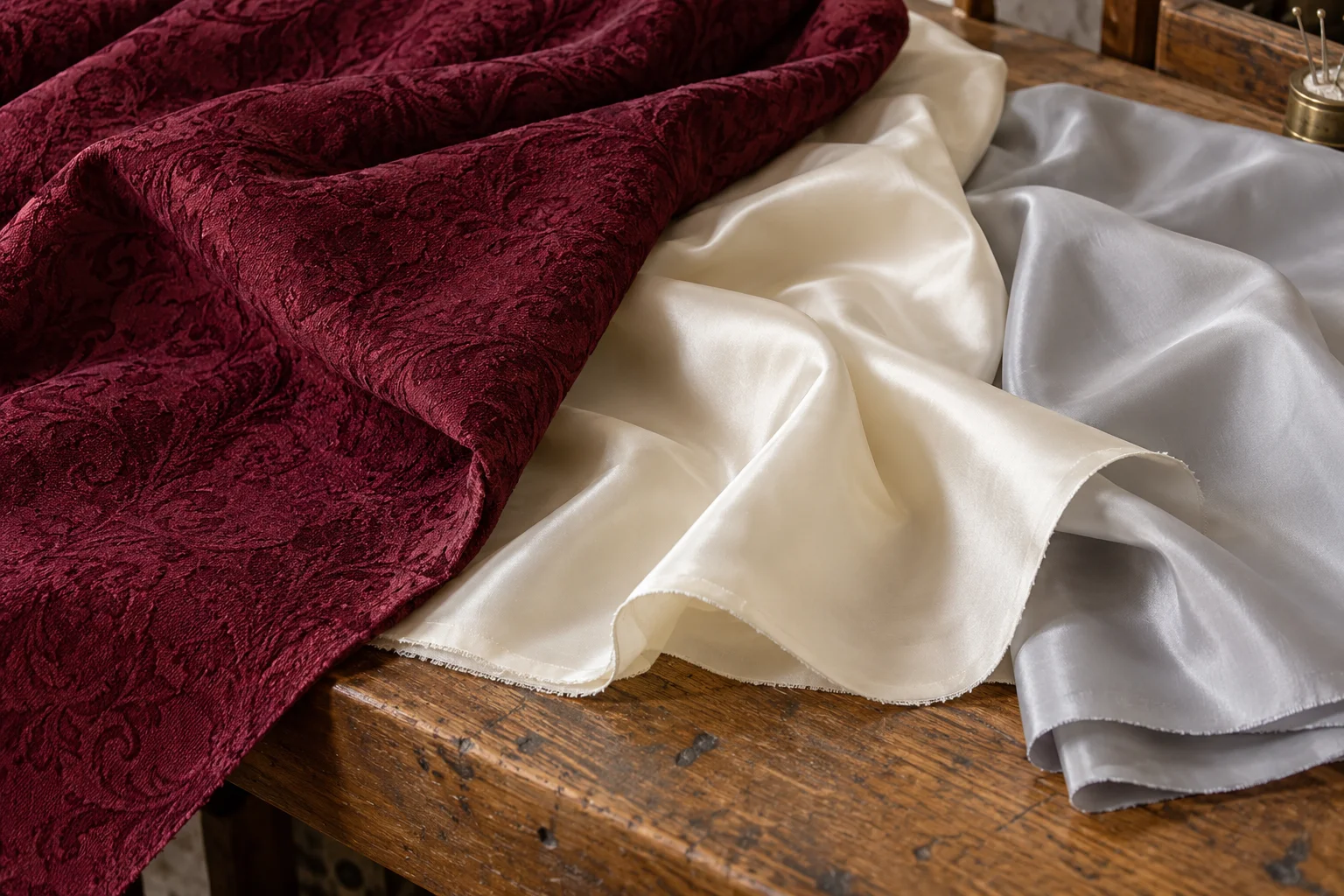
For lined dance costumes, lining selection should match the outer fabric’s stretchability and hanging quality. Start the lining worksheet with those questions: how does the lining stretch, and how does it hang beside the outer fabric? Then consider the named fibre and its documented properties. Bemberg is Asahi Kasei’s brand of cupro regenerated cellulose fiber. Bemberg slides easily even in layers. Bemberg absorbs and releases moisture from perspiration.
Plan for the complete costume under stage lighting
Environmental conditions can significantly affect thermal resistance, evaporative resistance and total heat loss. Clothing weight, drape and tightness of fit can minimize or even neutralize the apparent differences between fabrics or fabric assemblies measured by this [ASTM F1868] test method. For your high-heat-lighting fitting, put the complete costume on the rehearsal checklist. Record the chosen lining, movement observations and any requested alterations together.
Choose wardrobe sweat-shield attachment
Review the shield’s attachment and care instructions alongside your costume plan. For a sewn or pinned option, consider Prym’s regular dress-shield family. Prym’s regular dress shields are 100% cotton. These shields can be sewn in or secured with dress-shield safety pins. These dress shields can be washed at up to 60 degrees.
Keep the shield’s care instruction in the wardrobe record for that specific item.
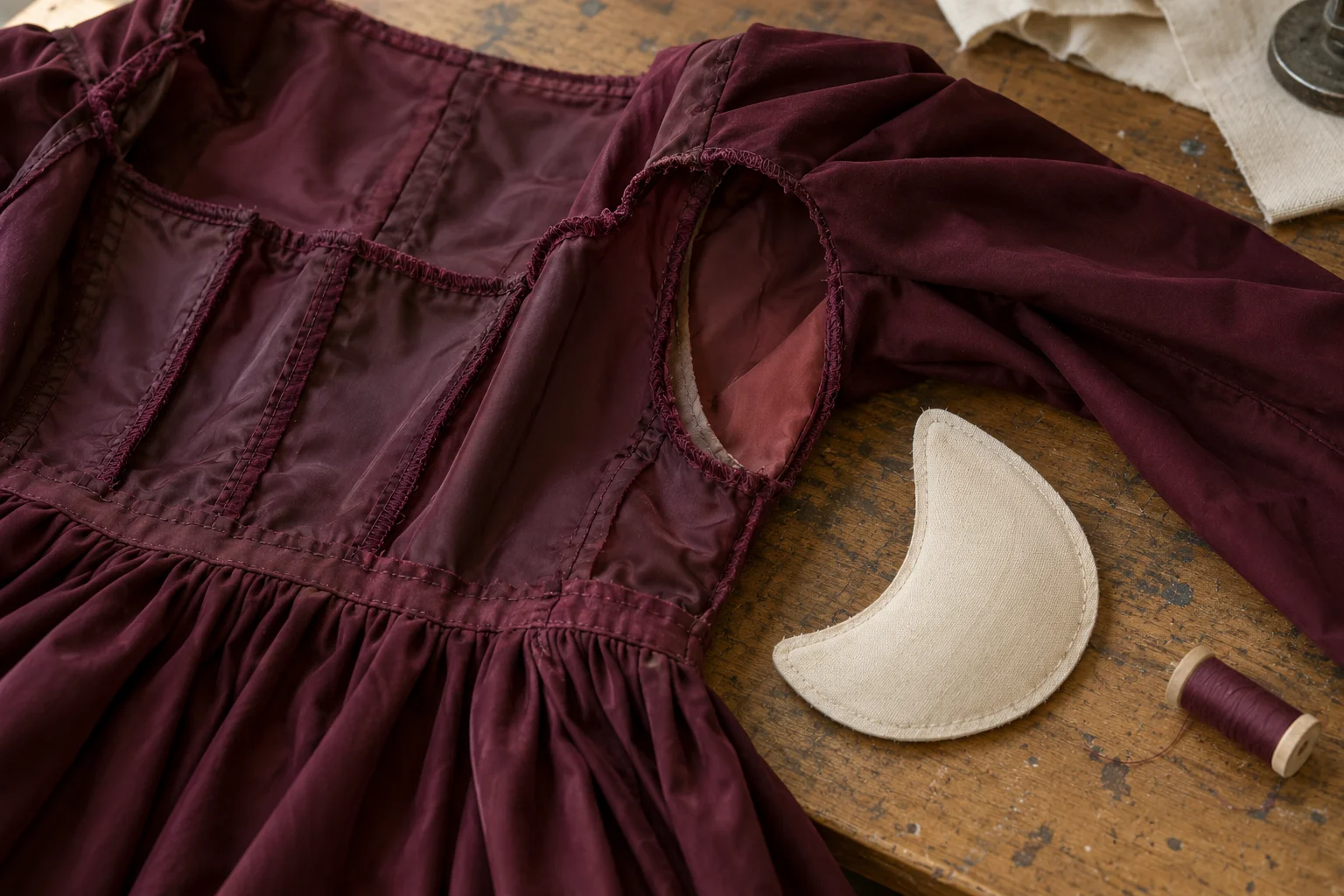
A wearable shield option
For Kleinert’s On-and-Off regular-sleeve shields, the elastic straps slip over the arm and shoulder, and the shield also pins to the bra. Kleinert’s On-and-Off regular-sleeve shields are machine washable.
Choose the attachment approach during the fitting, and record the exact shield item with its care instructions.
Bring a wardrobe worksheet to the fitting
Use these prompts to close the selection process:
- Gusset: which drafting method and underarm measurement will you use?
- Mock-up: which height will you try, and what movement will you rehearse?
- Sewing: have you checked the gusset corners?
- Lining: what stretchability and hanging quality are you looking for?
- Shield: which item, attachment and care instructions belong in the wardrobe record?
Return to Style for further costume reading.
Sources
- Janome — Adding Arm Gussets for Stage Movement
- The Seam Whisperer — How To Add A Diamond Underarm Gusset
- AAHPERD / Elizabeth R. Hayes et al. — A Guide to Dance Production
- Asahi Kasei — Bemberg Features and properties leaflet
- Asahi Kasei — Bemberg Functionality
- ASTM International — Clothing-material hotplate test significance and use
- Prym — Dress shields M, beige
- Kleinert’s — On-and-Off Dress Shields for Regular Sleeves